Solar Panel Cost Per Watt: Typical Prices and What Changes Them
Solar panel cost per watt explained with typical ranges, what affects pricing, and how to estimate panel cost for your system size.
Key takeaways
- Panel pricing is commonly compared as dollars per watt ($/W).
- Higher-wattage purchases usually lower your $/W due to volume and shipping efficiency.
- Panel cost is only one part of total system cost (inverter, mounts, wiring, permits).
Typical solar panel cost per watt
For consumer purchases, a common range is $0.40 to $1.20 per watt for panels alone. Lower values are more common for larger orders, while smaller one-off buys and premium products trend higher.
| Buying scenario | Typical $/W range | What it usually means |
|---|---|---|
| Small purchase (1–2 panels) | $0.70–$1.20/W | Higher shipping and retail margins |
| Medium order (3–10 panels) | $0.50–$0.90/W | Better pricing with manageable freight |
| Larger order / pallets | $0.40–$0.70/W | Best $/W, requires delivery logistics |
Related: Solar system cost breakdown
How to estimate panel cost for your system
Start with the panel wattage you need, then multiply by your expected $/W.
Panel cost ≈ (needed panel watts) × ($/W)
Example: If you expect $0.65/W and you need 2,000W of panels, panel cost is roughly $1,300.
Helpful next step: How to size a solar system Solar panel output calculator
What changes solar panel $/W the most
1) Total wattage purchased
Buying more watts usually improves $/W because the seller can reduce handling and shipping costs per panel.
2) Shipping and delivery method
Freight delivery can be cheaper per panel than standard shipping, but may require scheduling, a safe drop location, and inspection.
3) Panel type and brand tier
Higher-efficiency or premium-tier products can cost more per watt. Whether that “pays off” depends on roof space constraints and goals.
4) Warranty terms and product category
Panels with longer warranties or certain certifications can be priced higher. Compare like-for-like before concluding a panel is “overpriced.”
Panels vs total system cost: avoid the common budgeting mistake
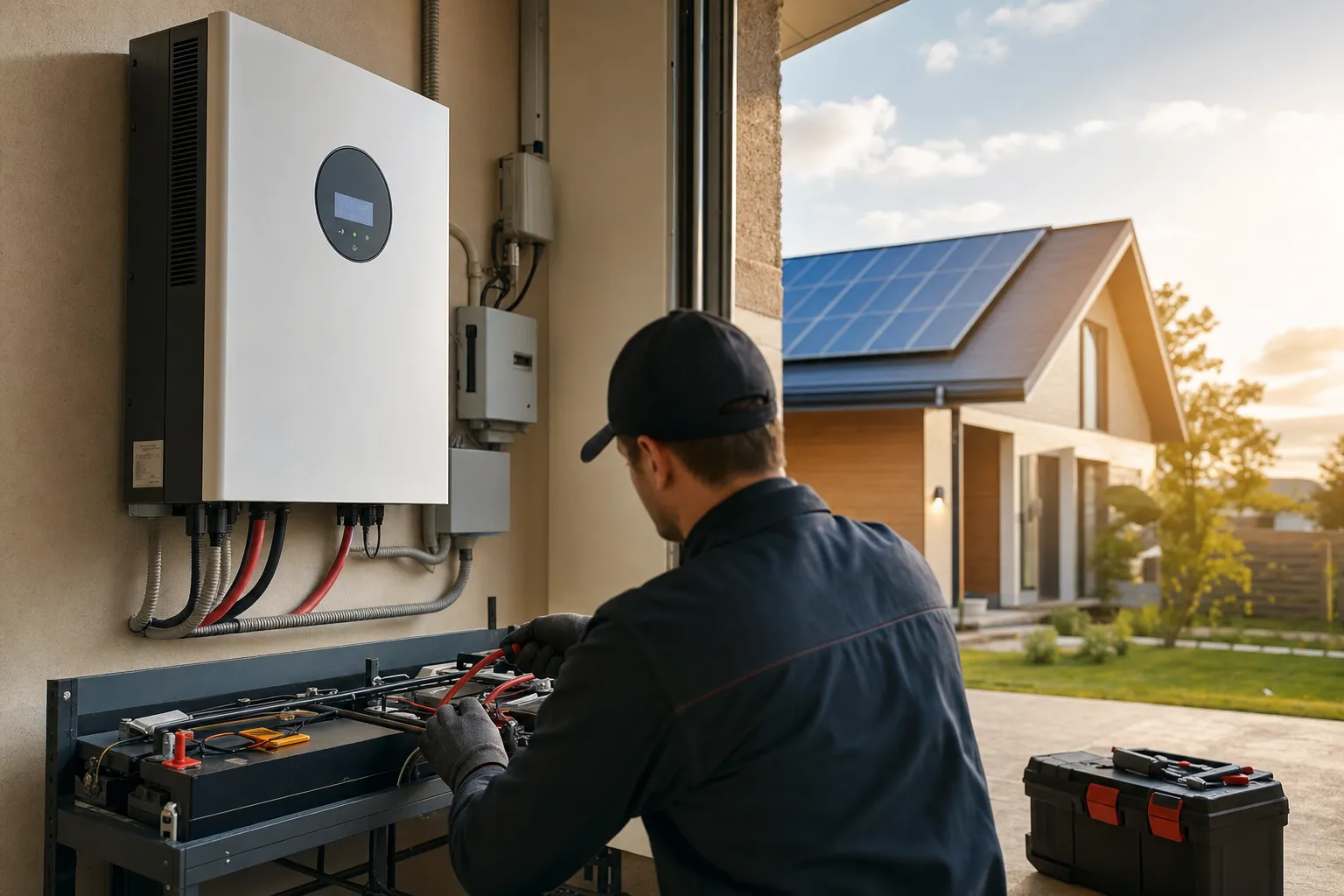
It’s easy to focus on panel $/W and forget the rest of the system. Typical add-ons include mounting hardware, wiring, protection devices, combiner boxes, inverter(s), and potentially batteries. Permits and labor (if not DIY) can also be major contributors.
Solar system cost breakdown DIY vs installer cost Solar components explained
FAQ
Is a lower $/W always better?
No. Price should be compared alongside warranty, expected performance, compatibility with your mounting setup, and delivery reliability.
Why do small orders cost so much more per watt?
Shipping and handling are relatively fixed. When spread across fewer watts, the cost per watt increases.
Do higher-efficiency panels reduce total system cost?
Sometimes. If you’re limited by roof space, higher efficiency can reduce the number of panels and mounting hardware needed.
Should I budget panels as half the total cost?
Not reliably. In some systems, batteries or labor dominate. Use a full breakdown to estimate realistically.
Next logical reads
Solar battery cost per kWh Solar system cost breakdown How to size a solar system Solar panel output calculator