Solar Panel Cleaning Cost: DIY vs Professional (Typical Prices)
Solar panel cleaning cost explained: typical professional pricing, DIY costs, what changes the price, and when cleaning is worth it.
Key takeaways
- Professional pricing varies most by access and roof complexity.
- DIY “cost” is usually time + safe tools, not expensive supplies.
- Cleaning is most likely worth it when you have visible soiling and measurable output drop.
Typical solar panel cleaning cost (professional)
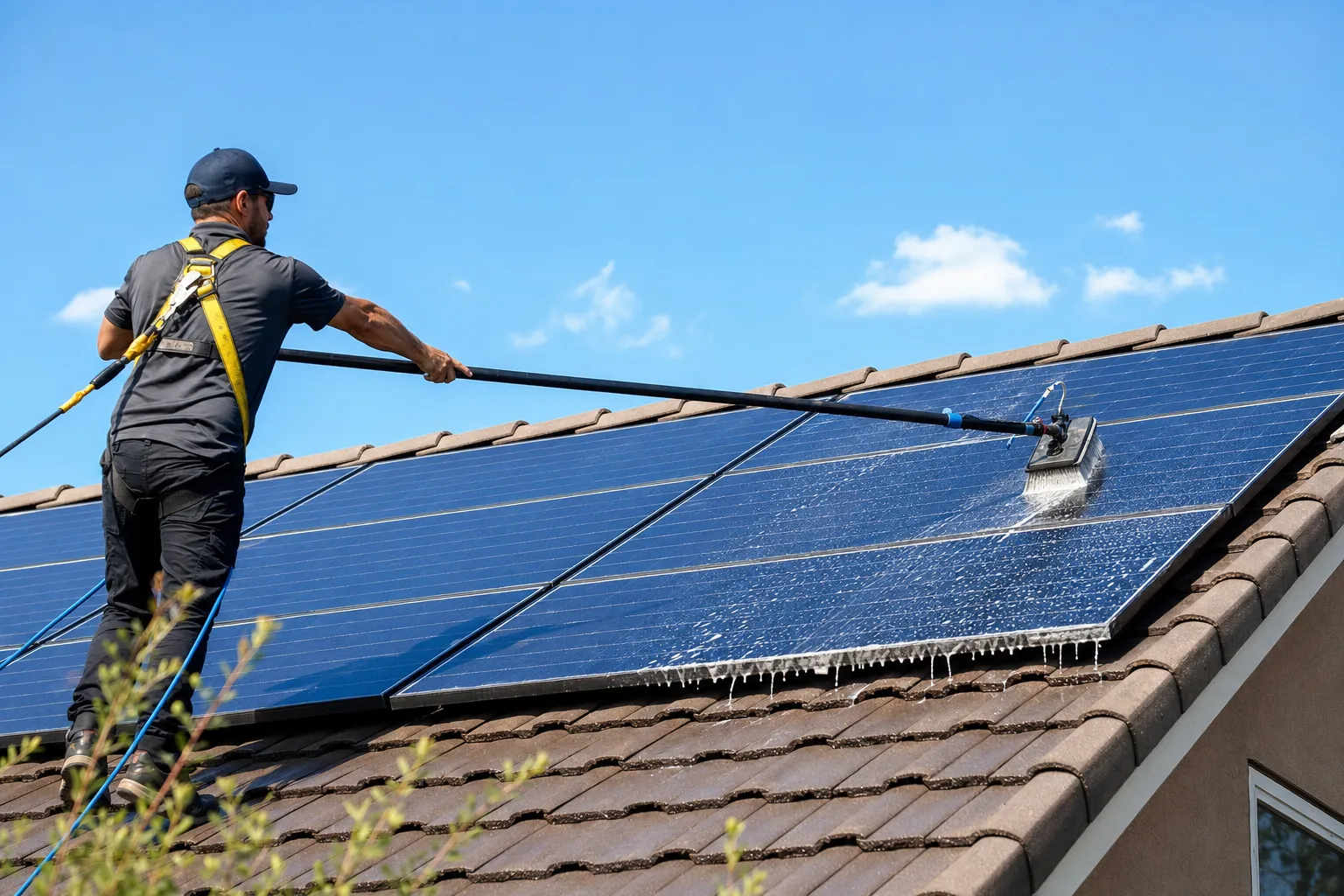
Common pricing models include per-panel, per-array, or minimum service calls. Typical ranges vary widely by region and access.
| Pricing model | Typical range | What changes it |
|---|---|---|
| Minimum service call | $150–$300+ | Travel time and setup |
| Per panel | $8–$20+ per panel | Panel count, pitch, height |
| Per system / array | $200–$600+ | Access, complexity, add-ons |
Use these ranges for budgeting, then confirm locally.
DIY cleaning: what it typically costs
DIY costs are usually low if you can clean safely from the ground (or a stable platform) using the right tools. Avoid harsh chemicals and abrasive materials.
- Soft brush or microfiber tool (non-abrasive)
- Hose access or deionized water (optional)
- Time + safe setup (often the biggest “cost”)
Related: Solar maintenance checklist
What changes the cleaning price the most
1) Roof access and pitch
Steeper or higher roofs increase time, safety requirements, and cost.
2) Panel count and layout
More panels usually increases time, but may reduce per-panel pricing.
3) Soiling type
Dust and pollen are usually easier than sticky residue, heavy bird droppings, or salt spray buildup.
4) Bundled services
Some providers bundle inspections or minor maintenance, which may change total price.
Is solar panel cleaning worth it?
Cleaning is worth considering when you can tie it to a measurable performance drop or visible soiling. If your system output looks normal for the season and weather, cleaning may have minimal impact.
Troubleshoot low solar output Solar panel output calculator
A practical approach: check your system monitoring for a consistent drop compared with similar weather periods, then inspect for visible dirt or shading changes.
FAQ
How often should solar panels be cleaned?
There’s no universal schedule. Clean when you have visible soiling or a sustained performance drop not explained by season or weather.
Can I use soap or chemicals?
Often you don’t need them. If you use any cleaner, follow manufacturer guidance and avoid harsh chemicals.
Does cleaning void warranties?
Usually not, but improper methods can cause damage. Follow manufacturer recommendations.
Is professional cleaning safer?
Professionals may have the right safety equipment and access methods. Avoid risky DIY roof work.
Next logical reads
Troubleshoot low solar output Solar maintenance checklist Solar system cost breakdown Solar panel cost per watt