Inverter Keeps Shutting Off: Troubleshooting (Overload, Low Voltage, Heat)
Inverter keeps shutting off? Use this safe checklist to identify overload/surge, low battery voltage, voltage drop from cables, overheating, and settings issues—plus the next logical fixes.
Table of contents
Key takeaways First: capture the shutdown clue Cause 1: overload or surge start Cause 2: low battery voltage (real) vs voltage drop (wiring) Cause 3: overheating / poor airflow Cause 4: settings, modes, and cutoffs Common mistakes FAQ Next logical reads
Key takeaways
- Most inverter shutdowns are caused by overload/surge or low voltage under load.
- Low voltage shutdown can be a battery problem or a cabling/termination voltage-drop problem.
- Use the inverter’s alarm code/status as your compass—don’t change multiple things at once.
How to size an inverter (watts, surge, draw) Battery cable size for inverters
First: capture the shutdown clue
Before you “fix” anything, get one data point:
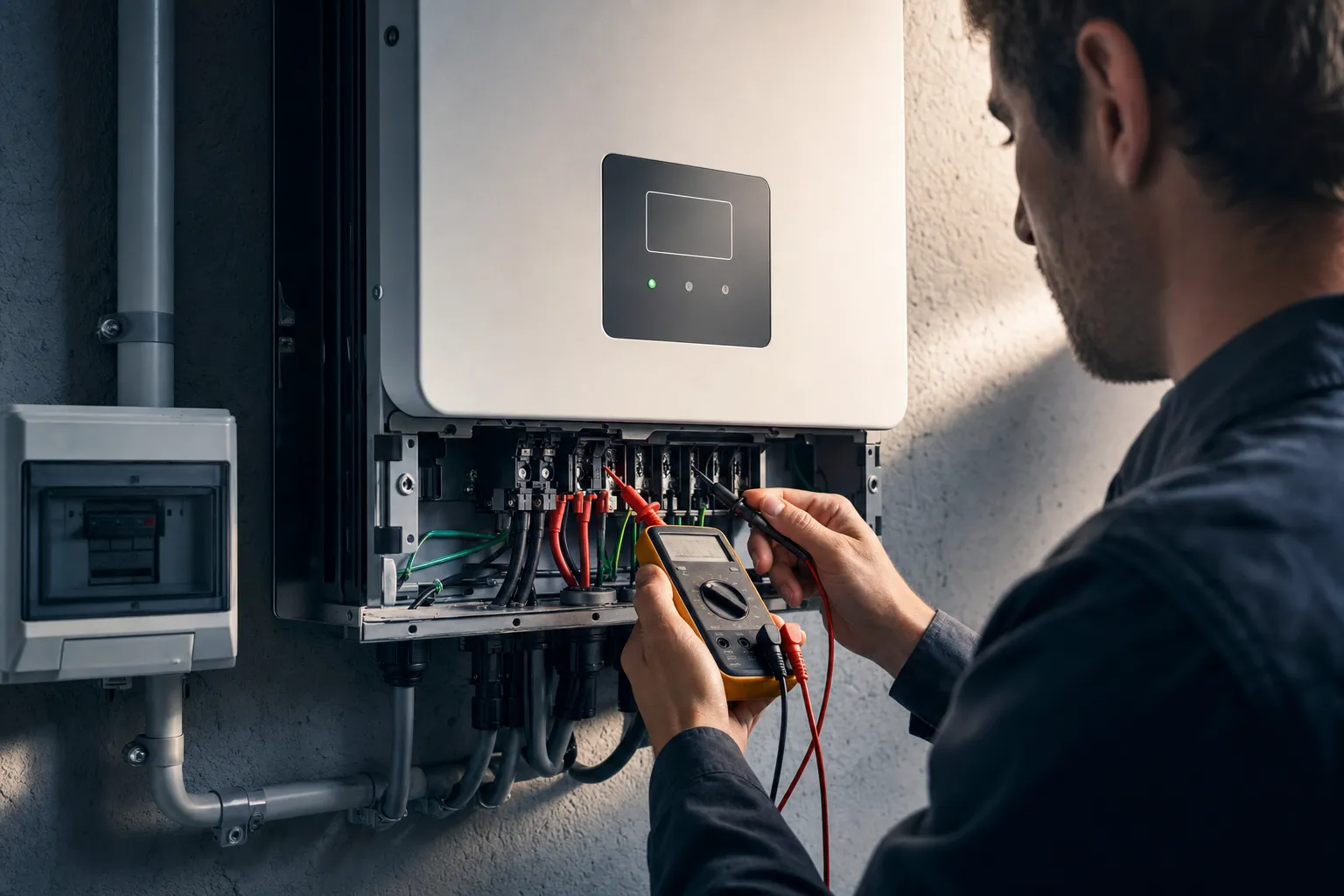
- What does the inverter say? (fault code, LED pattern, app message)
- What load was running at shutdown? (microwave, pump, compressor, power tool)
- Did it shut off instantly (surge) or after minutes (heat)?
If your inverter has a history log, that’s often the fastest answer.

Cause 1: overload or surge start
If the inverter shuts off when a device starts (fridge compressor, pump, microwave), suspect surge. If it shuts off when several things run together, suspect overload.
What to do (safe checks)
- Try the same load with everything else off.
- Test a smaller load (lights, phone charger) to confirm the inverter can run at all.
- Check whether the load is actually larger than expected (some appliances have higher start current than the label suggests).
Inverter sizing guide Pure sine vs modified sine (compatibility)
Cause 2: low battery voltage (real) vs voltage drop (wiring)
This is the most common “mystery” shutdown: the battery reads fine at rest, but the inverter trips low voltage under load.
Scenario A: the battery is actually low
- Battery was discharged overnight and hasn’t recovered yet.
- Solar input is low (clouds, shade, winter sun angle).
- Battery capacity is smaller than the loads demand.
Battery capacity calculator Solar battery not charging (checklist)
Scenario B: the wiring is causing voltage drop
High current at 12V (and sometimes 24V) punishes long battery cable runs and marginal lugs. The inverter “sees” the sag and protects itself.
- Long battery-to-inverter cable run
- Undersized cable or incompatible terminals
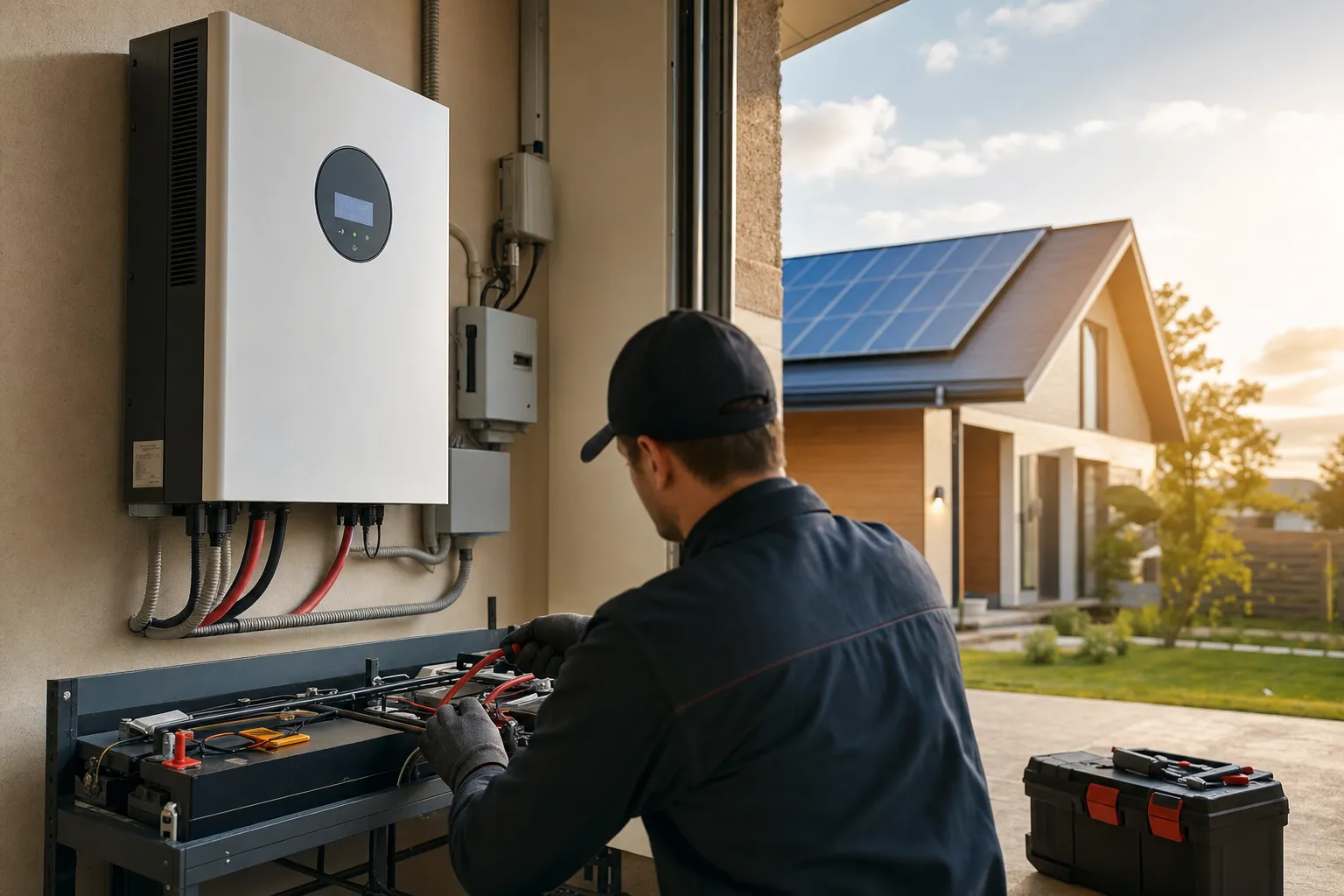
- Loose or corroded connections (heat is a warning sign)
Battery cable size for inverters Solar wire size Fuse and breaker sizing
System-voltage reality check
If you’re pushing a lot of power through a 12V inverter, shutdowns can be a design signal. Higher system voltage usually reduces current and makes stable performance easier.
How to choose solar system voltage 12V vs 24V vs 48V
Cause 3: overheating / poor airflow
If shutdown happens after minutes (especially at higher loads), suspect temperature. Inverters need airflow, and some compartments heat up far more than expected.
- Check ventilation and clearance around the inverter.
- Look for dust buildup on vents and fans.
- Confirm the inverter is not mounted near a heat source.
Cause 4: settings, modes, and cutoffs
Some inverters have configurable low-voltage cutoffs or eco/search modes. A mismatch between your battery type and settings can create confusing behavior.
- Confirm battery type (lead-acid vs lithium) and recommended cutoffs.
- Check eco/search mode if small loads cause “cycling.”
- Verify any external remote switch or wiring isn’t intermittently disconnecting.
Li-ion vs lead-acid batteries Solar components explained
Common mistakes
- Upsizing the inverter to solve wiring: bigger inverters often increase battery current and make the real problem worse.
- Ignoring terminations: heat at lugs/bus bars is a serious clue.
- Blaming solar production first: many shutdowns happen even with full sun if the battery-side path is weak.
- Changing multiple settings at once: you lose the signal of what actually fixed it.
FAQ
Why does my inverter shut off when I start the microwave?
Microwaves can create a surge and high continuous draw. If the inverter is near its surge limit, or the battery voltage sags under load due to cables/terminals, it may shut down to protect itself.
Battery voltage looks fine—why does the inverter say low voltage?
Voltage at rest can look normal. Under load, current increases and voltage can sag. That sag can be caused by a low battery, undersized cables, long runs, or bad terminations.
Is inverter shutdown dangerous?
Shutdown itself is usually protective. But repeated shutdowns can signal overheating, loose connections, or undersized wiring—those can be safety issues worth addressing promptly.
When should I call a professional?
If you see melted insulation, smell burning, find hot terminals, or can’t safely isolate the battery/inverter circuit, stop and contact a qualified professional.
Next logical reads
Inverter sizing (prevent overload/surge issues) Battery cable size for inverters Solar battery not charging Solar maintenance checklist Low solar output troubleshooting