Solar Combiner Box and Disconnect Guide: When You Need One (and What It Does)
Solar combiner box and DC disconnect explained in plain English: when you need one, what’s inside, where it goes, and how it improves safety and troubleshooting for multi-string arrays.
Table of contents
Key takeaways What a combiner box does (plain English) When you typically need one What’s inside a combiner box Where it goes (near array vs near controller) DC disconnects: what they’re for Common mistakes FAQ Next logical reads
Key takeaways
- A combiner box combines multiple PV strings into a single “home run” and can add string protection.
- You’re more likely to need one when you have multiple parallel strings, long runs, or you want clearer isolation for troubleshooting.
- Outdoor PV hardware should be chosen with a DC-rated + weather-rated mindset.
Series vs parallel solar panels Solar wiring decisions (pillar hub)
What a combiner box does (plain English)
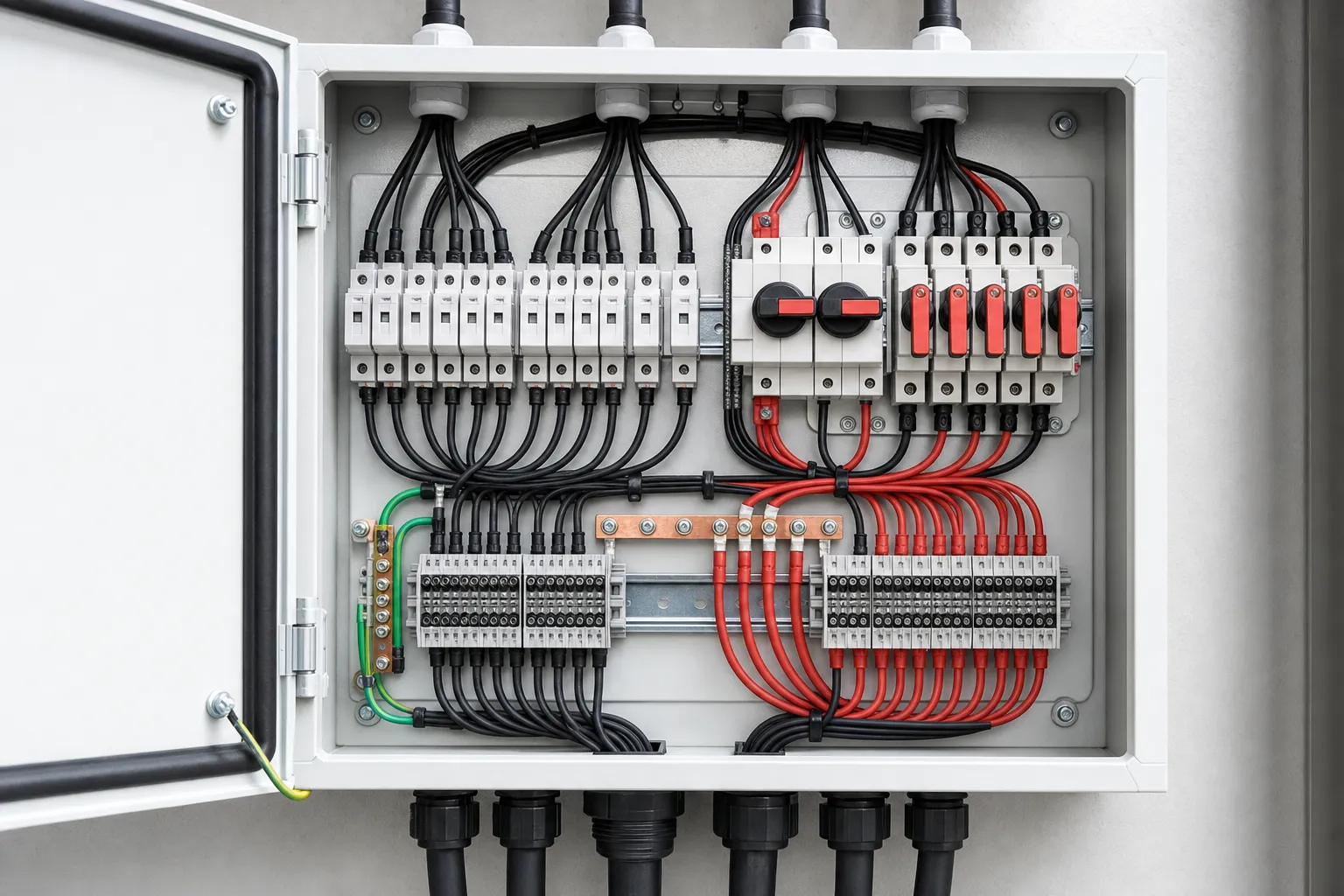
If your array has more than one string, you have multiple sets of PV wires leaving the panels. A combiner box is simply a tidy, protected place to bring those strings together and send one pair of wires onward.
Combiner box = multiple PV inputs → one output (“home run”).
When you typically need a combiner box (and when you don’t)
You’re more likely to need one if…
- You have multiple strings in parallel and need organized string-level protection and isolation.
- Your array is far from the controller/inverter area and you want a single protected “home run.”
- You want troubleshooting that’s less like detective work (isolating one string at a time).
You may not need one if…
- You have one string and a short run with appropriate connectors and a clean routing path.
- Your system is small enough that a simpler junction point (or direct run) stays safe and serviceable.
MPPT vs PWM (input voltage/current tradeoffs)
What’s inside a combiner box (high-level)
Combiner boxes vary, but commonly include some combination of:
- String fuses or breakers (when string protection is needed)
- Bus bars for combining conductors cleanly
- Surge protection (sometimes)
- Strain relief / cable glands to prevent water ingress and cable damage
Fuses vs breakers (PV and battery circuits) Fuse/breaker sizing (planning guide)
Where it goes: near the array vs near the controller
Placement is a tradeoff. The simplest way to think about it is: put the “combining” step where it reduces complexity and improves access.
Near the array
- Shorter individual string runs
- One longer home run back to the controller
- Convenient for string-by-string isolation near the source
Near the controller/inverter area
- May keep more equipment in an accessible service location
- Can increase rooftop/outdoor wiring complexity if strings are long
Wire size (amps, distance, voltage drop) Choose a system voltage (planning)
DC disconnects: what they’re for (serviceability + safer troubleshooting)
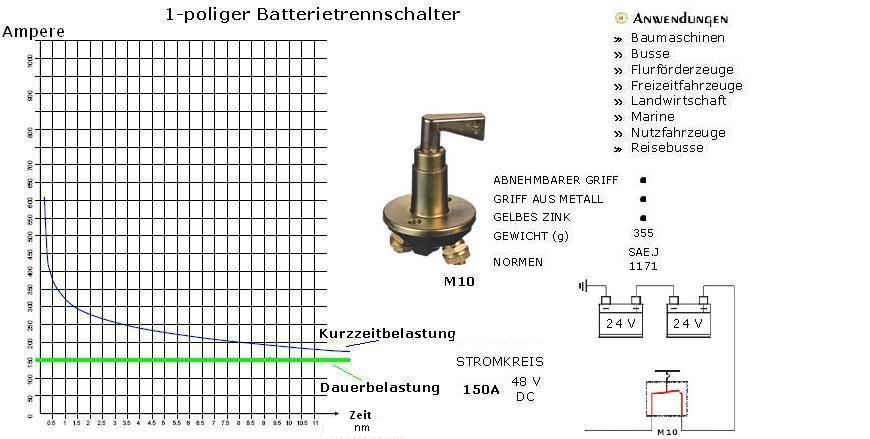
A disconnect isn’t about making solar “safe to touch.” It’s about giving you a clear, reliable way to isolate a circuit for service and troubleshooting.
- PV-side disconnect: isolate the array wiring from the controller/inverter area.
- Battery-side disconnect: isolate the inverter and DC loads from the battery.
Use disconnects that are explicitly rated for DC at the correct voltage.
Wiring & protection cost (budget guide) Solar maintenance checklist
Common mistakes (and what to do instead)
- Overbuilding small systems: a tiny single-string setup often doesn’t benefit from a complex combiner.
- Ignoring outdoor ratings: water ingress and UV damage can turn “neat wiring” into long-term problems.
- Mixing connector types: use compatible, purpose-rated PV connectors and glands.
- No labeling: unlabeled strings make troubleshooting slower and riskier.
- Using AC equipment on DC: choose DC-rated protection and disconnects.
FAQ
Do I need a combiner box with only one string?
Often, no. If you have a single string with a short, well-routed run and appropriate connectors, a combiner box may add complexity without adding much benefit.
What’s the difference between a combiner box and a junction box?
A junction box is typically just a protected connection point. A combiner box is specifically meant to combine multiple strings and often includes string protection and isolation.
Can I use an AC disconnect switch for solar DC?
No. Use a disconnect explicitly rated for DC at your PV and/or battery voltage.
How do series vs parallel decisions affect whether I need one?
Parallel strings are the most common reason combiner boxes show up, because combining and protecting multiple strings is exactly what they’re designed for.
Where should the disconnect be placed?
Place disconnects where they’re accessible and actually help isolate the part of the system you might need to service. The “best” location depends on your layout.
Next logical reads
Series vs parallel panels Fuse and breaker sizing Wire size Wiring & protection cost Solar components explained