Solar Fuses vs Breakers: What to Use (and Where) in a Solar System
Solar fuses vs breakers explained with a placement-focused guide: battery-to-inverter, controller-to-battery, PV strings, disconnects, and DC ratings.
Table of contents
Key takeaways Quick answer What each device is good at The five places people get protection wrong A shopping checklist (ratings to verify) Common mistakes FAQ
Key takeaways
- Fuses and breakers both provide overcurrent protection, but they’re not interchangeable in every DC application.
- The best “upgrade” is often better placement and correct DC ratings, not more devices.
- Battery-to-inverter protection is commonly the highest priority because currents can be high.
Wiring & protection cost (big picture) Solar fuse and breaker sizing (planning guide)
Quick answer (for most small systems)
Think of it this way: the reader is the hero trying to keep a system safe and serviceable. The “guide” (this site) gives you a simple plan: protect the high-current paths, add safe isolation points, and verify DC ratings.
- Use fuses where you want simple, fast protection and you’re fine replacing the device after it trips.
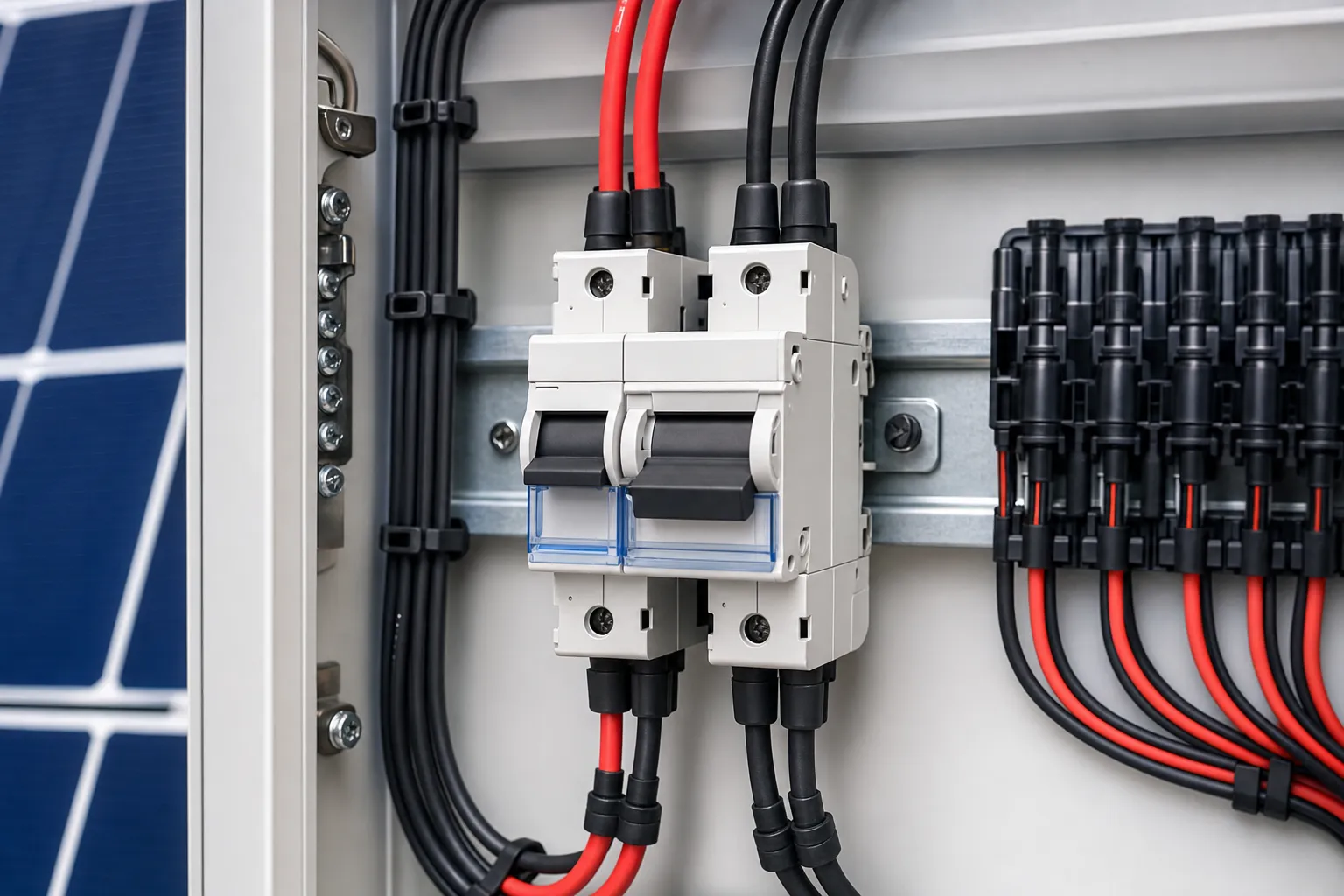
- Use DC-rated breakers where resettable protection (and sometimes switching) is useful.
- Use disconnects for safe service isolation (disconnects are not automatically overcurrent protection).
What each device is good at
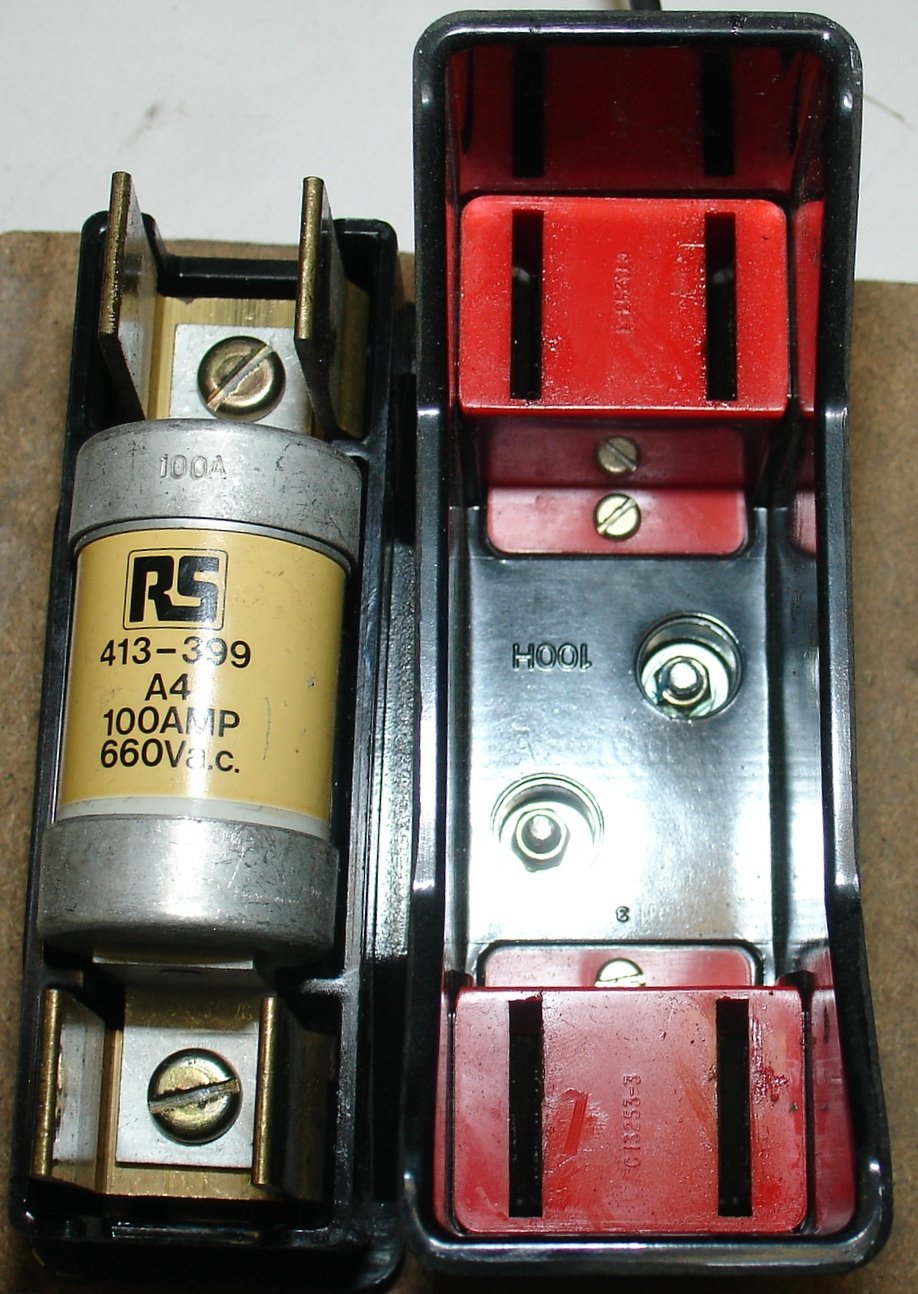
Fuses (simple, fast, one-time)
A fuse is a deliberate weak link: it opens when current exceeds its rating. Many solar builds use fuses on the battery side because they’re straightforward and come in high-current options.
Breakers (resettable, but DC ratings matter)
A breaker is resettable and can be convenient for testing or maintenance. The key is that DC interrupt ratings and voltage ratings must match your design.
The five places people get protection wrong
1) Battery-to-inverter protection
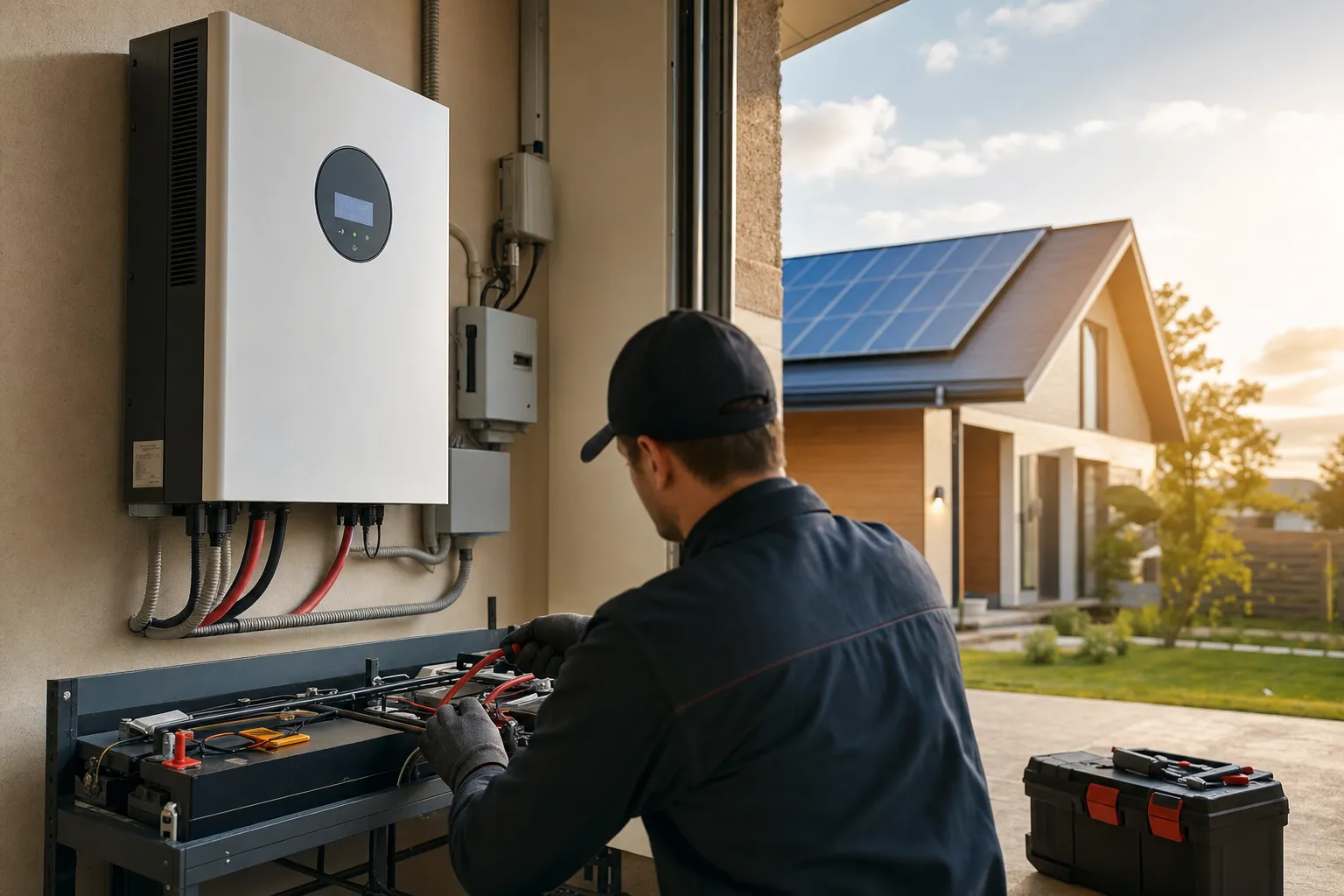
This is often where current is highest. Protection choices here should be tied to the inverter’s real draw, surge behavior, and the cable run.
Inverter sizing (watts, surge, draw) Solar wire size (amps + distance) Battery cable size for inverters
2) Controller-to-battery protection
Charge controllers can deliver substantial current into batteries. Protection here is about preventing wiring faults from turning into overheating or damage.
MPPT vs PWM (controller choice) Components overview
3) PV strings / combiner protection
Arrays with multiple strings may need string-level protection depending on the design. The safest approach is to follow the charge controller/combiner guidance for your configuration and voltage.
Series vs parallel solar panels Combiner boxes and disconnects
4) Loads and DC distribution
Small branch circuits (lights, DC outlets, fans) are where a clean distribution approach improves reliability. The goal is predictable protection, not “one big fuse for everything.”
5) Confusing disconnects with overcurrent protection
A disconnect makes a system safer to service, but it doesn’t necessarily protect wiring from overcurrent. Make sure you have both jobs covered where required.
A shopping checklist that prevents unsafe mismatches
- DC voltage rating: must be at or above your system voltage (and any array/open-circuit voltage where applicable).
- Interrupt rating: the device must be able to safely open the circuit under fault conditions.
- Current rating: match the circuit’s expected maximum current with appropriate design margin.
- Temperature/environment: some devices are not meant for heat, moisture, or outdoor exposure.
- Compatibility: match lugs, bus bars, cable size, and enclosure space.
If protection decisions are forcing awkward cable runs, revisit layout and voltage first: choose solar system voltage.
Common mistakes (risk → symptom → fix direction)
- Using AC breakers on DC circuits: can fail to interrupt safely; only use devices rated for your DC application.
- Protection too far from the battery: leaves more unprotected cable length than intended.
- Sizing protection to “what I plan to use”: protection should match potential circuit current, not a guess of normal usage.
- Using a disconnect as protection: different job; verify you have overcurrent protection where required.
FAQ
Do I need a fuse and a breaker?
Sometimes. Many systems use a fuse for primary protection and a breaker for convenience/isolation on certain circuits, but the right mix depends on the design.
What does “DC-rated” actually mean?
It means the device is designed and tested to interrupt DC current safely at a specified DC voltage and fault level.
Where should the battery fuse go?
Placement is design- and code-dependent, but the core idea is to protect the wiring connected to the battery from fault current.
Do solar panels need fuses?
Some multi-string arrays do, depending on configuration. Follow your controller/combiner guidance and verify ratings for your array voltage.
Can a breaker be used as a switch?
Only if it’s rated for that use. Some DC breakers are designed for switching; others are not.
Next logical reads
Solar wiring and protection cost Solar wire size Series vs parallel solar panels Solar fuse and breaker sizing How to size an inverter MPPT vs PWM